
Why go
A place to travel slowly.
Multan's identity is carried by its shrines, bazaars and craft traditions. The monumental tombs around the old fort precinct give the city its skyline, while narrow commercial streets reveal tile, textile and pottery workshops. Visit early or late in the day, particularly outside winter, and leave time for the city beyond its famous domes.
Know the place
A fuller guide to Multan.
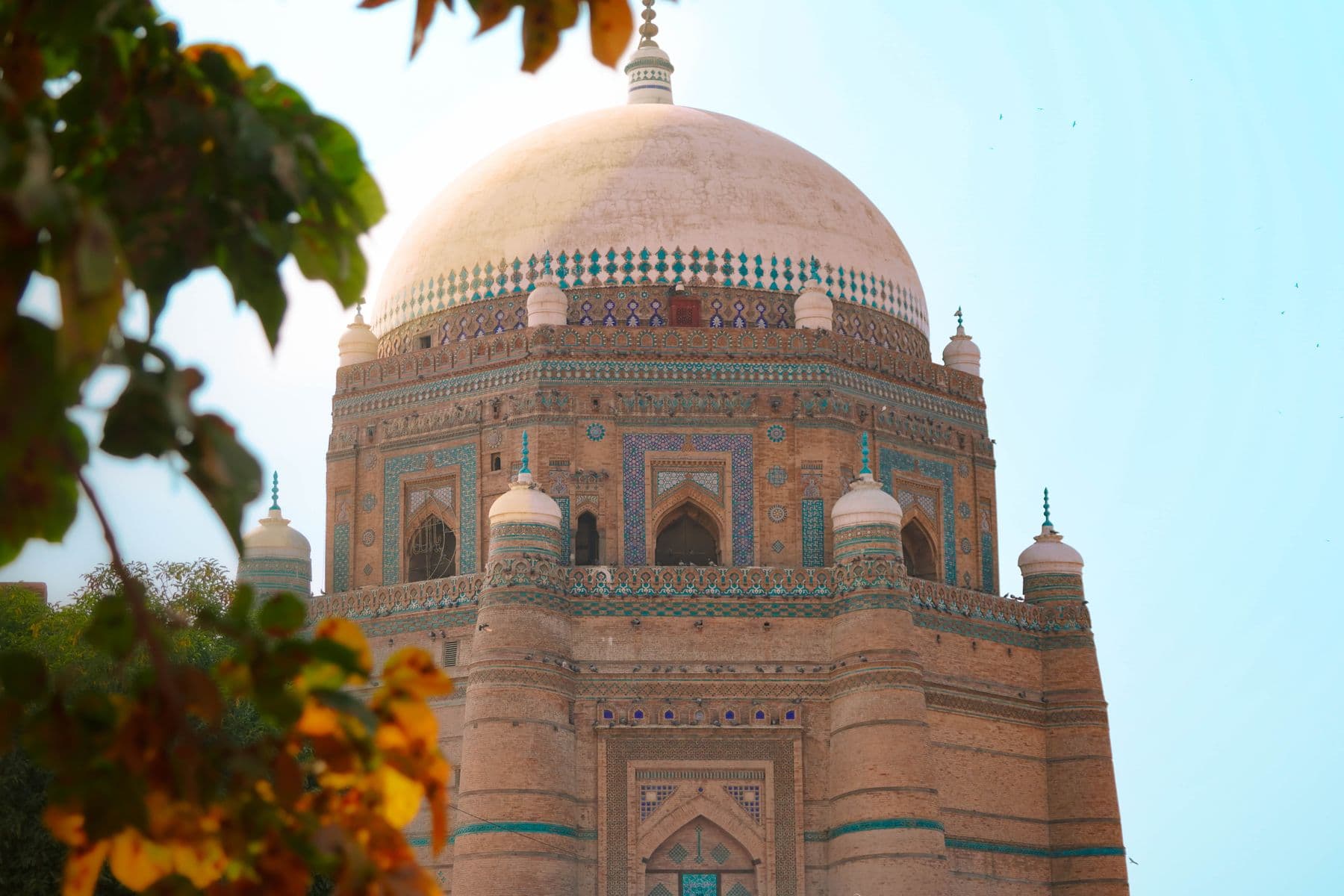
Multan's historic identity is tied to Sufi scholarship, pilgrimage, trade and craft. The shrines around the former fort precinct dominate the skyline with brick, timber and blue tile, while bazaars below continue traditions of textiles, embroidery, pottery and sweets. The city deserves to be experienced as a living spiritual centre rather than a collection of decorative domes.
Two days can combine the principal shrines, old markets and a craft-focused visit. Winter is the most comfortable season. At other times, plan outdoor walking early and late because Multan's heat can be severe.
Shrines and sacred etiquette
Shah Rukn-e-Alam and Bahauddin Zakariya are active places of devotion. Dress modestly, remove shoes where instructed, keep voices low and ask before photographing worshippers. A local guide can explain architectural form, Sufi history and the continuing social life of the complexes without reducing them to visual attractions.
For the wider setting and ways to connect nearby places, read our Punjab regional guide.
Bazaars and craft traditions
The old commercial streets are known for blue pottery, embroidered textiles, leatherwork and regional foods. Quality varies, so visit reputable workshops and ask makers about process and origin. Buying directly from craftspeople provides a better encounter than treating every object as a quick souvenir.
Reading the old city
Modern traffic and construction surround the historic fabric, yet gates, lanes and elevated views still reveal the structure of the older city. Walk manageable sections, pause for food and allow the contrast between sacred precincts and commerce to form part of the story.
Explore related places and journey ideas in Sacred places.
Read the shrine architecture without losing sight of worship
At Shah Rukn-e-Alam, notice how the building's mass, brickwork and bands of tile relate to one another before moving closer. Bahauddin Zakariya provides another important religious and historical point of reference. Ask a guide to explain their different contexts rather than treating them as repeated versions of the same shrine. The surrounding movement of visitors is part of their contemporary importance.
Choose a visiting time that respects worship and any gatherings, and confirm which areas are accessible. A photograph should not require someone praying to move or a passage to be blocked. Architectural interpretation and devotional activity can coexist when the visitor keeps an appropriate distance. Do not assume that access rules at one complex apply unchanged at another, or that a donation buys permission to photograph anything.
For a more detailed route and practical planning advice, read Multan through its shrines, craft and old streets.
A two-day stay with room for makers and markets
Use one day for selected shrines and a manageable old-city walk with a meal and indoor pause. On another, arrange a genuine craft encounter and time in the commercial streets. A workshop should identify who makes the work and whether visitors are welcome during production. A shop selling pottery is not automatically a place where the pottery is made, and a demonstration should have clear terms.
Look closely at the pattern, glaze and form of blue pottery, and ask how an item is produced and packed for travel. Textile or other craft purchases deserve the same attention to origin and workmanship. Keep the visit free of pressure to buy simply because a guide arranged the stop. A fair payment for an agreed demonstration can be a better exchange than a supposedly free encounter financed through undisclosed sales expectations.
Plan for heat, access and a comfortable evening
Multan's outdoor visits can be demanding in hot conditions. Give the exposed walking a suitable time and keep a museum, craft encounter or hotel rest as an alternative. Winter is often more comfortable, but the actual day's weather and crowd conditions still matter. Confirm dependable cooling, room access and the location of meals when choosing accommodation. Staying overnight should improve the experience, not merely extend the checklist.
Ask for a quotation that separates guide time, transfers and any workshop or admission costs. A shrine visit may have arrangements unlike a conventional ticketed monument, so follow local guidance rather than inventing a fixed fee from a blog. Leave an evening for regional food that suits your needs and the day's location. An onward trip towards Bahawalpur or another city requires its own time and should not consume both of Multan's useful mornings.
When you are ready to compare organised trips, search packages including Multan. Availability depends on the tourism companies' current listings.
Build the route
Three anchors for the journey.
Shah Rukn-e-Alam
A monumental shrine whose form and tilework define Multan's historic skyline.
Bahauddin Zakariya
A major spiritual complex within the old fort precinct.
Old bazaars
Lanes for blue pottery, textiles, embroidery and the practical life of the city.
Plan responsibly
Useful context, confirmed closer to departure.
Season windows are planning guidance, not live access guarantees. Road conditions can change quickly. For a booked package, the tourism company must confirm that the relevant roads are open and the trip can proceed.
- Prioritise winter for comfortable walking.
- Confirm access around religious gatherings and prayer times.
- Carry socks and modest clothing for shrine visits.
- Arrange craft visits through reliable local contacts rather than assuming every shop is a workshop.
Research reference: official tourism or heritage information. Access and operating details should still be confirmed close to travel.
Add Multan to a journey or compare packages that include it. Published packages show their current availability, while final operating confirmations remain the tourism company's responsibility.