Why go
A place to travel slowly.
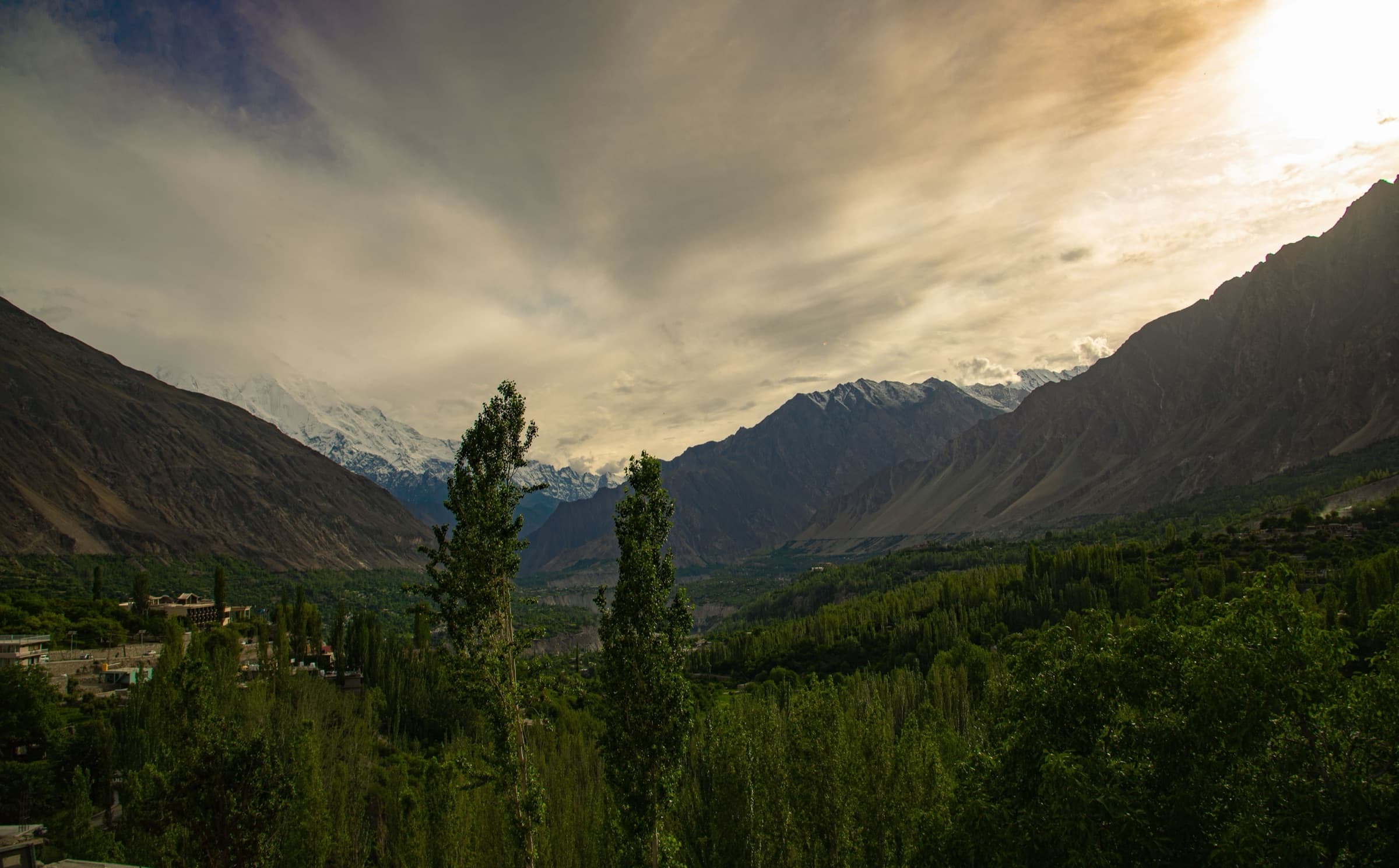
Hunza brings together the Karakoram’s scale and a lived-in valley rhythm. Base yourself around Karimabad for heritage, viewpoints and day trips, then let the road lead north towards Passu and the upper valley.
Know the place
A fuller guide to Hunza.
Hunza is best understood as a chain of settlements rather than a single mountain resort. Karimabad and Aliabad form the practical centre, where restaurants, shops and heritage sites sit beneath the steep walls of the Karakoram. North of them, the highway passes Attabad Lake, Gulmit and Passu before climbing towards the Khunjerab frontier. Each part of the valley has its own pace, language traditions and view of the surrounding peaks.
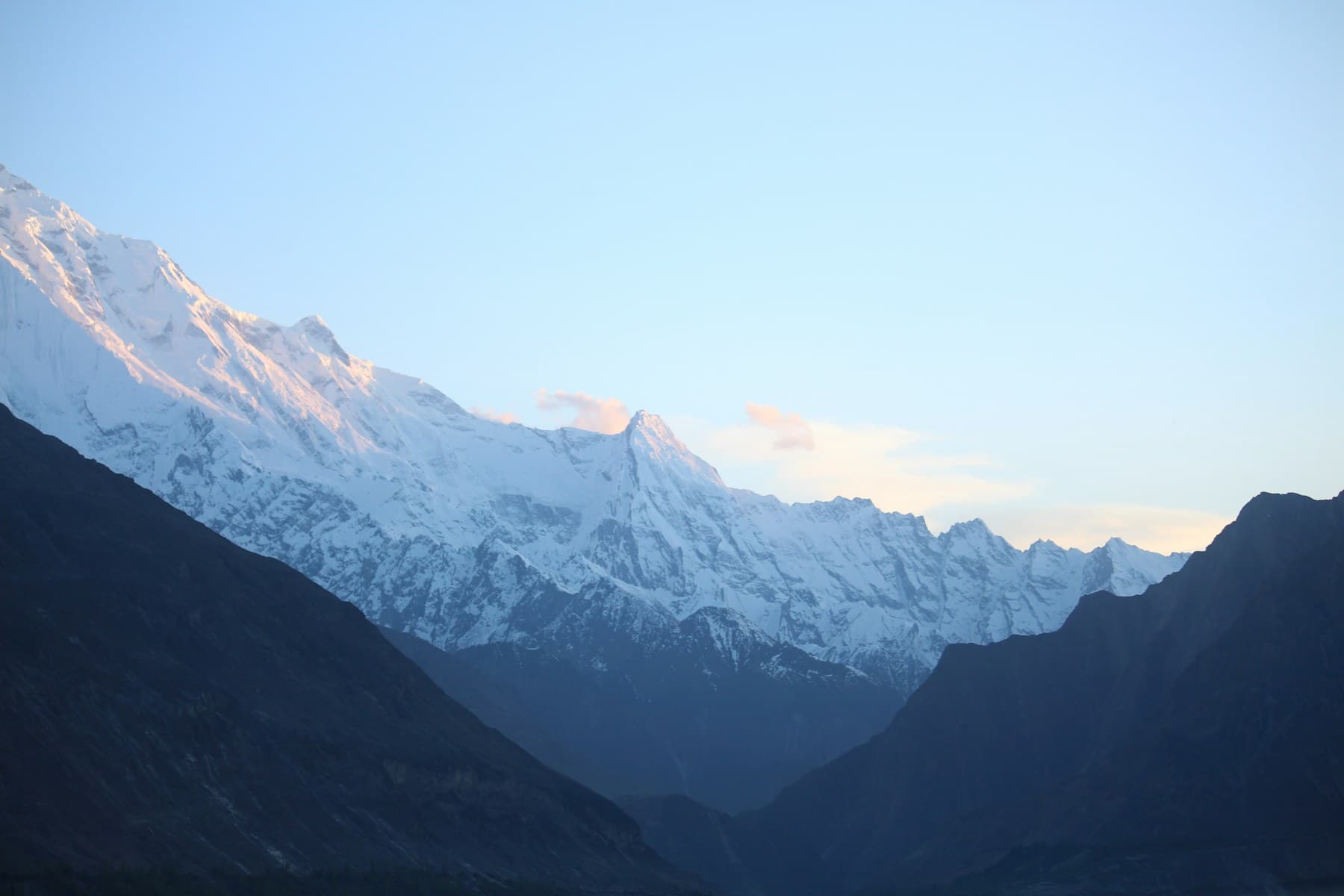
The pleasure of being here comes from combining famous viewpoints with ordinary valley life. Walk between irrigation channels and orchards, visit a fort with a local guide, stop for regional food, and leave enough time for changing light over Rakaposhi, Ultar and the Passu Cones. A hurried two day circuit can photograph the landmarks. Four to six days gives the place room to become more than a backdrop.
Karimabad, Altit and the historic heart
Karimabad is the most convenient base for first visits. Baltit Fort rises above the old settlement, while Altit Fort and the restored village below it reveal a different layer of local history. The lanes are steep, so comfortable shoes matter. Early morning and late afternoon are quieter and kinder for photography, while the middle of the day is useful for museums, cafés and craft shops.
For the wider setting and ways to connect nearby places, read our Gilgit-Baltistan regional guide.
Attabad Lake and Upper Hunza
The road north crosses tunnels beside Attabad Lake and continues into Gojal. Gulmit offers historic houses, music traditions and a calmer village base. Passu is known for its sharp cathedral peaks, glacier approaches and the suspension bridges near Hussaini. These are not interchangeable photo stops. Staying overnight in Upper Hunza makes sunrise walks and short local excursions possible without spending the entire day in a vehicle.
Food, etiquette and valley rhythm
Look for local breads, apricot products, handmade noodles and dishes built around seasonal grains and vegetables. Ask before photographing people, homes or religious spaces. Dress respectfully in villages and remember that paths often cross working fields. Buying directly from community businesses and using local guides keeps more of the value of the trip within the valley.
Explore related places and journey ideas in Mountain villages.
A first stay in Hunza, day by day
Use the arrival afternoon to settle in and walk near your accommodation rather than immediately climb to another viewpoint. Give the next morning to Baltit and Karimabad, with time for interpretation inside the fort and an unhurried meal afterwards. Altit and the surrounding settlement can form another outing, allowing you to compare buildings, village lanes and the way water supports the cultivated landscape below the peaks.
For a five-night stay, consider moving to Upper Hunza after the central-valley visits. Use Gulmit or Passu as a base for locally guided walks and a deliberately chosen outing, not as points to photograph from the highway. Keep the final full day flexible. A cloudy morning can become a craft or food encounter, leaving another chance for a mountain view without extending the drive or compromising the return.
For a more detailed route and practical planning advice, read The Karakoram Highway, planned with context.
Choose a walk, not just a famous photograph
The most satisfying short walk may follow a village lane or irrigation channel rather than lead to a celebrated viewpoint. Ask a local guide which paths are public and which cross cultivated or private land. You can learn more by looking at how a settlement works than by moving quickly between high overlooks. A glacier approach, suspension bridge and village stroll are different activities and need different descriptions.
Ask about the gradient, footing, exposed sections and a comfortable turnaround point before agreeing to a walk. A bridge photograph is not evidence that crossing is appropriate for everyone or that the structure is currently open. Families and travellers with mobility needs should have a genuine alternative. Do not let the most daring member of a group decide the effort or exposure expected of everybody else.
What to ask before booking your room and vehicle
A central base can make meals and everyday supplies easier, while a quieter hillside property may depend on transfers. Ask where the room is situated, how many steps lead to it, whether heating and hot water are dependable and which meals can be prepared. For spring or autumn travel, confirm the actual services rather than assuming summer arrangements continue unchanged. A view is a pleasure; a comfortable night is essential.
Separate gateway transport, local touring and special outings in the quotation. Check whether entry fees, guiding, meals and driver accommodation are included. Leave Khunjerab conditional on current road, access and group requirements, not as a guaranteed finale. Compare the total time in the valley with the time travelling into and out of it. Five nights on a package title do not necessarily mean five full days available to explore.
For a planned journey through this area, compare The grand road north. Read the full route and current departure details before booking.
Build the route
Three anchors for the journey.
Karimabad
The valley base for bazaars, viewpoints and nearby heritage.
Baltit & Altit
Historic settlements that tell the valley’s architectural story.
Upper Hunza
A dramatic road towards Passu, Gulmit and high Karakoram scenery.
Plan responsibly
Useful context, confirmed closer to departure.
Season windows are planning guidance, not live access guarantees. Road conditions can change quickly. For a booked package, the tourism company must confirm that the relevant roads are open and the trip can proceed.
- Allow a separate day for Upper Hunza rather than treating Passu as a rushed return excursion.
- Flights to Gilgit and northern road journeys can be affected by weather, landslides and visibility.
- Carry cash outside the main towns and keep a buffer day before a fixed onward connection.
- Spring blossom and autumn colour are beautiful but exact timing changes each year.
Research reference: official tourism or heritage information. Access and operating details should still be confirmed close to travel.
Add Hunza to a journey or compare packages that include it. Published packages show their current availability, while final operating confirmations remain the tourism company's responsibility.