
Why go
A place to travel slowly.
Mohenjo-daro is a place to look closely. Streets, wells, drains and brick platforms reveal an urban system built in the third millennium BCE. The site is exposed and the surviving fabric is fragile, so a thoughtful visit combines the museum with a guided walk and avoids the strongest midday heat.
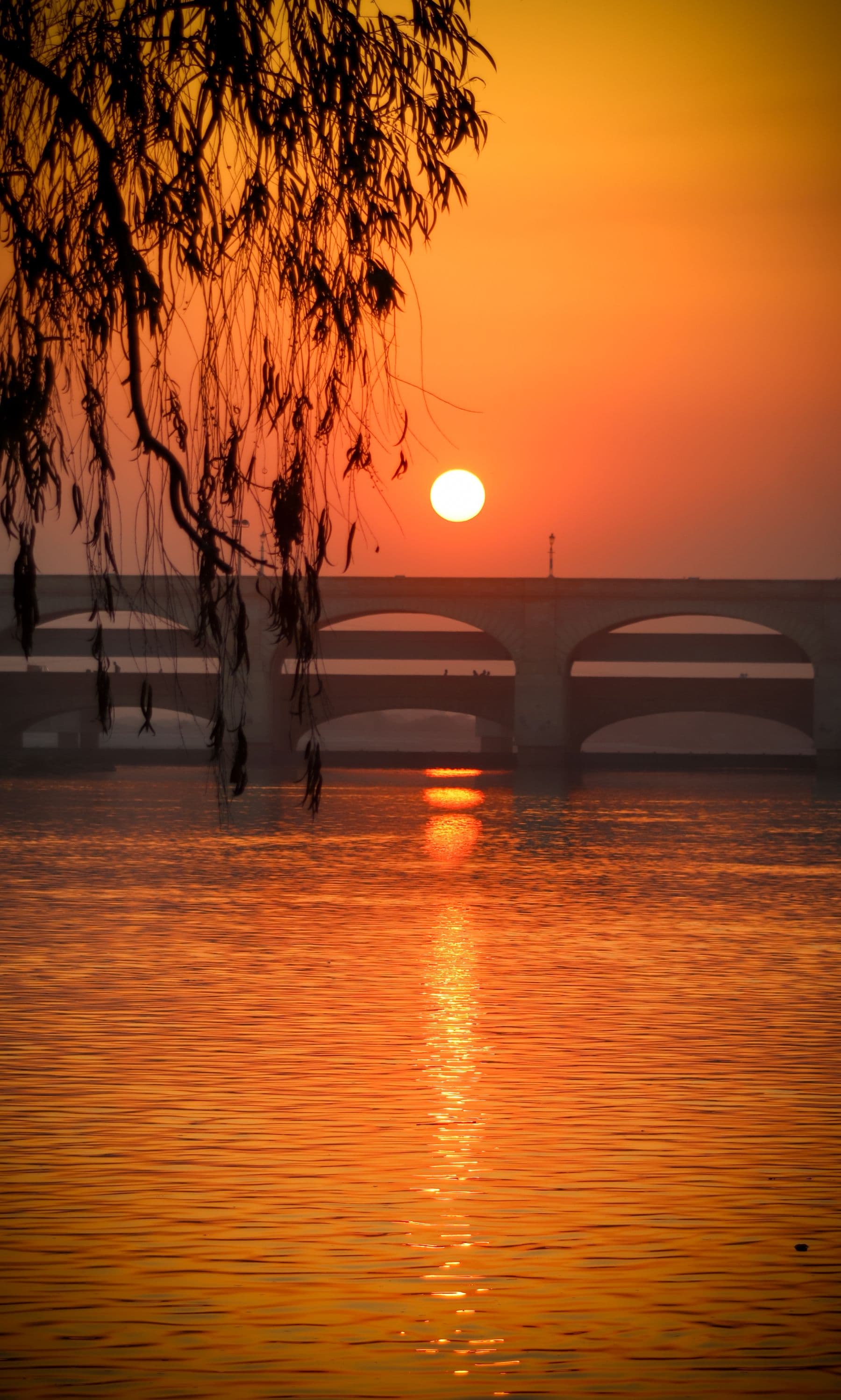
Regional view: the Indus River at Sukkur. Mohenjo-daro's archaeological site is near Larkana.
Know the place
A fuller guide to Mohenjo-daro.
Mohenjo-daro was one of the great urban centres of the Indus civilisation. Its excavated streets, wells, platforms and drainage systems allow visitors to think about city organisation in the third millennium BCE without relying on a single palace or royal tomb. The importance lies in the urban whole and in the questions archaeologists continue to investigate.
A meaningful visit starts in the museum, where objects and plans make the outdoor remains easier to interpret. The site is extensive, exposed and environmentally fragile. Walk with a trained guide, stay on approved paths and avoid the strongest heat of the day.
Museum before ruins
The museum introduces seals, pottery, tools and the chronology of excavation. Spend enough time with the site plan to understand the relationship between the raised mound and the lower town. This preparation turns low brick walls outside into legible streets, houses and public infrastructure.
For the wider setting and ways to connect nearby places, read our Sindh regional guide.
Citadel and lower town
The raised western area contains major excavated structures, including the space commonly called the Great Bath. The lower town shows residential blocks, wells and lanes. Interpretive labels and a guide help separate evidence from speculation, which is important at a site often surrounded by popular myths.
Conservation and climate
Salt, groundwater, heat and weather threaten the ancient brick. Visitors contribute by staying off walls, following designated routes and not removing even small fragments. Photography should never require contact with the remains. The site is strongest when approached as a protected archaeological record, not an adventure playground.
Explore related places and journey ideas in Ancient cities.
Look for systems rather than an imagined palace
The city is most interesting when you pay attention to relationships: a street and its adjoining buildings, a well and the spaces it served, drainage and the organisation of a neighbourhood. A site plan helps make those connections visible. The Great Bath is a familiar starting point, but it should not become the only thing you remember. Choose several examples that explain how an urban settlement worked.
Archaeology does not provide an equally certain answer to every question. Functions assigned to some buildings are interpretations, and popular claims about rulers or the city's decline may go beyond the evidence. Ask a guide to explain the basis for a statement and welcome an honest acknowledgement of uncertainty. That approach makes the visit more engaging than a dramatic reconstruction presented as unquestionable fact.
For a more detailed route and practical planning advice, read How to experience Mohenjo-daro with context.
Plan the gateway and the site visit as separate stages
Choose your arrival point and overnight accommodation before deciding how much of the site to visit. Check current transport with the provider instead of assuming a flight route mentioned in an old article still operates. A Karachi stay and a Mohenjo-daro visit should not be collapsed into a supposedly easy day trip. Count the journey inland, the local transfer and the return in both time and cost.
Begin with museum context when arrangements permit, then take a selected outdoor route while conditions are comfortable. Build shade and water breaks into the visit. An older traveller or family may prefer a shorter interpreted circuit to crossing every exposed area. Ask about the actual surfaces and facilities rather than accepting the assumption that low ruins necessarily mean an effortless walk.
A protected record that remains vulnerable
Weathering and conservation are part of what you see at Mohenjo-daro. They do not make the site less important; they show why access and visitor conduct need care. Remain on approved routes and follow any changed instructions. A fragment lying near a path still belongs to the archaeological record. Never move it to improve a photograph, pocket it as a souvenir or climb a wall for a higher view.
Budget for competent interpretation, local transfers, admission and a comfortable overnight stage rather than the sheer length of the itinerary. A second day can be useful for a slower visit if access and personal interest support it, but should not be filled with unrelated distant attractions. Take a site plan, questions and time to notice details. The most lasting memory may be an ordinary lane made understandable, not a spectacular monument.
When you are ready to compare organised trips, search packages including Mohenjo-daro. Availability depends on the tourism companies' current listings.
Build the route
Three anchors for the journey.
Citadel mound
Raised public structures that include the site's most recognisable excavated spaces.
Lower town
A street grid, homes and drainage that make ancient urban planning tangible.
Site museum
Objects and interpretation that give essential context before walking the ruins.
Plan responsibly
Useful context, confirmed closer to departure.
Season windows are planning guidance, not live access guarantees. Road conditions can change quickly. For a booked package, the tourism company must confirm that the relevant roads are open and the trip can proceed.
- Begin at opening time in warmer months.
- Use the museum and an authorised guide together.
- Carry drinking water, a hat and sun protection.
- Confirm current transport and opening information before travelling from Larkana or Sukkur.
Research reference: official tourism or heritage information. Access and operating details should still be confirmed close to travel.
Add Mohenjo-daro to a journey or compare packages that include it. Published packages show their current availability, while final operating confirmations remain the tourism company's responsibility.