
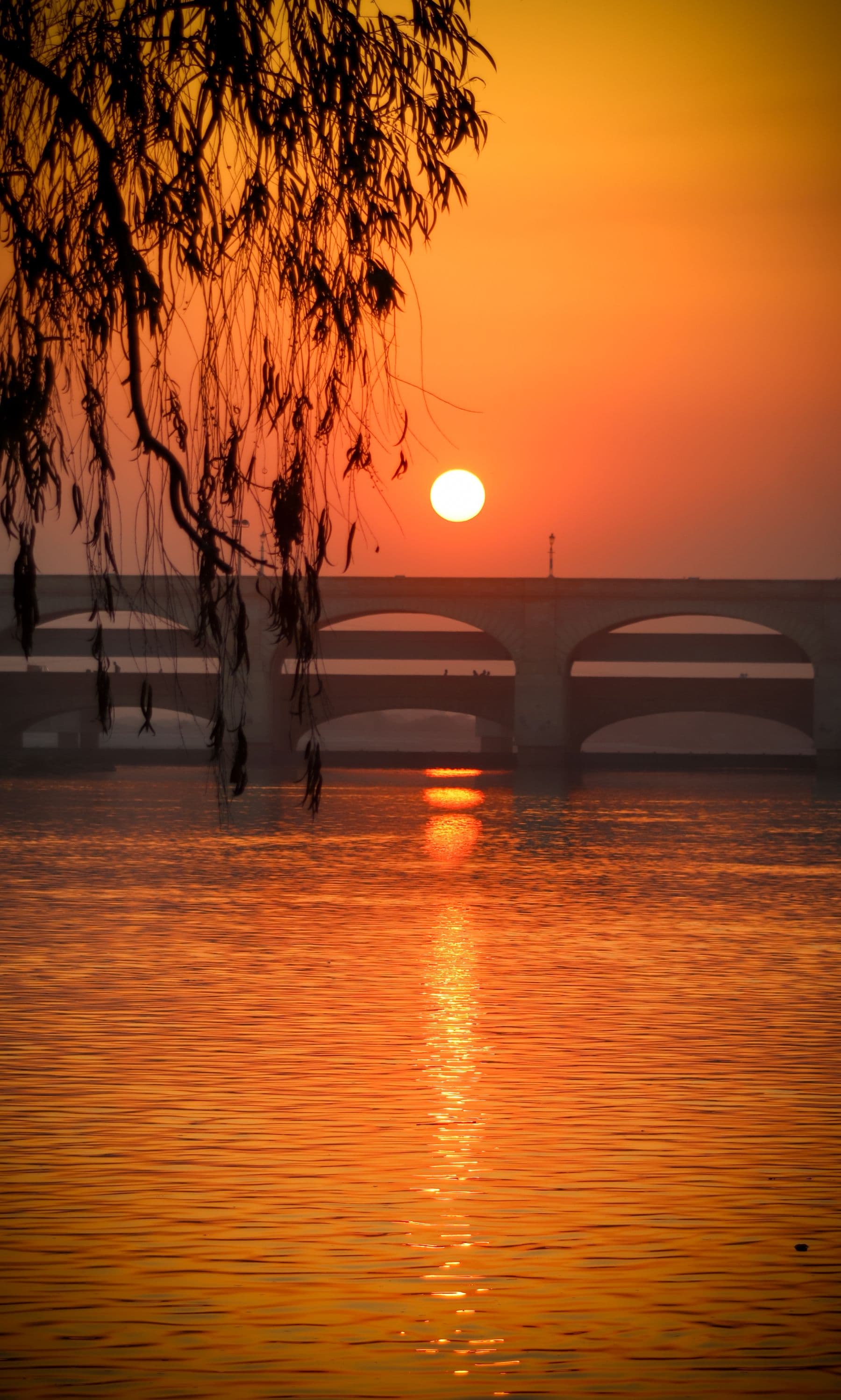
Regional view: the Indus River at Sukkur. The ruins discussed in this guide are near Larkana.
Begin in the museum
The site makes better sense after seeing its objects, plans and chronology. Begin at the museum, then walk the raised citadel area and lower town with a guide who can distinguish evidence from speculation.
Mohenjo-daro was a major urban centre of the Indus civilisation. Its brick construction, street pattern, wells and drains reveal organisation at a scale that becomes clear only when you move through the excavated quarters.
Place this route in its wider setting with our Sindh regional guide.
Protect what you came to see
The surviving fabric is vulnerable to salt, heat, rain and physical wear. Stay on visitor paths, do not climb walls and follow local conservation instructions.
The site can be intensely hot. An early start, drinking water and sun protection make for a more attentive visit.
- Allow at least three hours for the museum and ruins.
- Use a qualified local guide for interpretation.
- Avoid touching or sitting on ancient masonry.
For other journeys with a similar focus, explore Ancient cities.
Make the journey part of the story
Mohenjo-daro sits within the wider Indus landscape near Larkana. A well-planned visit acknowledges the distance, transport reliability and seasonal heat instead of treating the site as a quick detour.
Ask questions that the remains can answer
Walk with questions about how a city worked: where water came from, how streets connected, how households dealt with drainage and how different spaces were organised. Wells, brickwork and the layout make these questions visible without requiring an invented story about named rulers. A guide should distinguish archaeological evidence, scholarly interpretation and what remains uncertain. The Indus script has not been securely deciphered, so confident translations deserve particular caution.
The Great Bath and the raised western area are striking, but an explanation limited to the largest structures misses the urban achievement. Let the lower town show the repeated decisions that made ordinary life possible. Ask which remains are ancient, which have been conserved and where reconstruction aids understanding. A clear site plan helps you recognise relationships that are difficult to see from ground level among similar walls.
For local sights, overnight bases and visitor advice, use our Mohenjo-daro destination guide.
Give the site a proper place in the journey
Plan from a realistic nearby overnight base and confirm the transfer rather than treating Mohenjo-daro as a casual Karachi excursion. Larkana and other regional gateways have different transport connections; choose the one that fits your arrival and onward plans. Flight schedules and local services need current checking. Establish the full door-to-door journey before deciding whether a short visit is worthwhile.
Begin with the museum and an orientation where available, then choose a manageable outdoor circuit. Cooler morning conditions are generally more comfortable than exposed midday walking, but check the actual forecast and opening arrangements. Allow breaks and drinking water, especially for children and older visitors. A long period in extreme heat does not improve the quality of the visit simply because more ground has been covered.
Notice conservation as part of the story
Mohenjo-daro's surviving brickwork faces conservation challenges, including moisture and salt damage. The rules about staying off walls and using permitted paths protect a fragile archaeological record. Do not climb a structure for a better photograph or pick up loose material as a souvenir. If a section is closed, respect the closure even when an older itinerary or online image shows visitors there.
Before paying for a guided outing, confirm whether museum entry, site entry, transport and the guide's time are included. Ask whether the guide will explain uncertainty rather than offering dramatic but unsupported accounts. Keep the visit focused on this particular city. A wider Sindh journey can add other places on separate days without reducing Mohenjo-daro to one more stop between long transfers.
When you are ready to compare organised trips, search packages including Mohenjo-daro. Availability depends on the tourism companies' current listings.